Wednesday, November 18, 2009

I'm always reactionary, but everything is stupid. 

Tuesday, April 7, 2009

SUMMER CHECKLIST

i'm going to do these things this summer. this isn't a OH BOY THE THINGS ILL DO AND ADVENTURES ILL HAVE list. this is a "im buckling down and getting something accomplished" list. god dammit.

1. get a job. and suck it up. 
2. build a darkroom in my basement. get back into photos. get the fuck away from digital. use money from my job to make these things possible. 
3. find a girl. don't be passive about it. 
4. not waste days, unless it's specifically a day-wasting kind of day. but these days will be few. 
5. make a lot of shorts/film everything/make stuff.
6. fix some of my drums so they sound good. by fix i mean buy new heads, which isn't really fixing, it's the simplest way of solving a problem that i never feel like solving. 
7. get over the bad stuff. 

alright.

Tuesday, March 31, 2009

Who wants to read another English paper?

So last semester I wrote my final paper about Lost. I flat-out told my teacher that I couldn't find sources that held any interest for me, and frankly, I didn't need any (I used one quote). She was confident enough in me to say that she thought I could do it anyway. I'm kinda stagnating this semester as far as writing goes (just cause I haven't had that many real analytical things to write), and I was reading this again to, I don't know, inspire me again? Inspire me with myself, kinda douchey? Well yeah, but I'm proud of this paper. I think I made a pretty good case as to why Lost is better than any television show around, especially from some kind of "media commentary" perspective, like what engages the audience mind. So yeah, if you wanna read it, you can, obviously. I'm really just looking for a boost of ego because I psych myself out when I go to start writing a paper again. My teacher gave me a lot of confidence, but it kinda scared me into thinking I could never write something like these again. Wow, ok, anyway, cya. 

*and for anyone that wants to watch Lost, and hasn't, there's a big ol' spoiler waiting for you in this. jussayiiiiin.

Lost: An Exceptional Island In a Sea of Mediocrity

With the introduction of serialized storytelling, television made huge gains in narrative structure previously thought to be capable in films and novels alone. Relationships and plot blossomed episode-to-episode allowing complexity and character development to flourish. In the midst of this popular trend of serialized television shows, Lost has defined itself as the pinnacle of television, setting the bar to an unprecedented height and exemplifying all that television can encompass. Through its use of highbrowed allusions, complex storytelling and thought-provoking themes, Lost seeks to make its audience think about life, death, faith and reason among many other topics. The attention given to writing – as opposed to executing explosions (24) or configuring a love triangle (Grey's Anatomy) – establishes the show as a diverse world instead of a singularly-focused gimmick. In essence, “Lost” is the human experience as presented by a weekly dose of 42 minutes of television, an experience not likely to be found via Don Johnson or The Dukes of Hazzard.

The use of allusion stems from a desire to inform the audience about the different layers of a creative piece of work by referencing other forms of culture. While some television shows thrive off popular culture allusion, “Lost” uses intellectually high-end material to enforce ideas the writers want to get across on the show. Characters are frequently seen reading books that highlight characteristics shared between the show and the book, such as time travel in A Brief History of Time, survivalism in Lord of the Flies, or the sense of being in a fantastic world in Alice's Adventures in Wonderland. The books can potentially become integral to the show as when “a crucial plot development hinged on a copy of the Charles Dickens novel 'Our Mutual Friend'” (Aurthur, 1). By putting these references in the show, it inspires viewers to read and pick up clues and themes tangential, but altogether relevant to the overall picture of Lost. Communities organized by the writers and by overly devoted fans have formed virtual book clubs to study these works and weigh their importance to the show. A casual television viewer is now a scholar on Dostoyevsky and the mysticism of The Turn of the Screw.

John Locke was a famous 17th century philosopher commonly known for his social contract theory and beliefs on empiricism. To viewers of Lost, he is the boar-hunting, spiritually inclined recluse commonly seen seeking his greater purpose. This conscious effort on the part of the writers is not coincidental, but an intentional reference to inform the character more thoroughly. Philosophers lurk in the shadows of Lost as their names and beliefs are represented on-screen: Jean-Jacques Rousseau, the savage man, and solitary living as a lone island wanderer; David Hume and determinism as a relentless Scotsman; or Mikhail Bakunin and anarchy as a proponent of the destruction of an entire governance. Other basic ideas frequently resonate on the show, such as electromagnetism, psychology and religion. Though neither explained in entirety or dumbed down for the sake of falsely educating, viewers can seek out answers to why the DHARMA logo is shaped like a Buddhist symbol or if electromagnetism could end the world. Lost creatively uses its appeal to infuse thoughtful allusion into its subtext, making it not only entertaining, but educational.

More than any show on television, Lost uses its cumulative knowledge of culture as emphasis and inspiration. Whether it is an episode titled “A Tale of Two Cities” or Jack Shephard emerging as the leader (or shepherd) of his people, there is thought behind every decision. Both writers and viewers benefit from this thought-process: writers get to display their intellectual prowess and inspiration, while the audience are encouraged to educate themselves and become active viewers. Television of yesteryear had no interest in turning you away from the screen, while Lost goes out of its way to recommend it. It requires its audience to be knowledgeable and attentive, and gives them the tools in order to decode the many omnipresent mysteries. Where television's main goal is to suck an audience in, Lost strives to provoke thought and explore culture.

The initial mystery at the beginning of Lost had nothing to do with polar bears, mysterious island inhabitants or a great rumbling in the jungle from an unknown monster: the curiosity came from a desire to know about the characters the audience were just becoming familiar with. Each episode was dedicated to one character, using a flashback to probe into their lives and discover what motivated them to make the decisions they were forced to make. With an ensemble cast of 14 characters, keeping track of these intricate lives was no easy task for the audience. Neither were these flashbacks fully explanatory: brief periods of each character's life were focused on in each episode with a bounty of missing links that made their life a mystery in itself. Why was Locke in a wheelchair? What crime did Kate commit? Why do Jack and his father have issues? The audience were forced to ask questions that would be answered by future flashbacks, and only with several more could the audience begin to piece together the lives of these characters. The out-of-order process engages the viewer's mind to, once again, become active in the viewing process. Unless the information is fully digested and assembled, the audience loses the connection to the character.

While flashbacks are ubiquitous in any form of fiction, the literary dark horse technique is the flashforward, plunging the viewer into an unknown world with reason and explanation yet to be discovered. Though underutilized, the flashforward is a bold step for any writer who has set up a world full of complexities and consequences not easily changed, showing the determination of the story they have laid out. A story echoing Jack as a control-freak and drug abuser, the season three finale “Through The Looking Glass” (wink) saw Jack proclaimed as a hero, attending the funeral of an unknown person and drunk-dialing a hesitant female. The collective carpet was pulled from every Lost viewer's feet when the flashback everyone thought they were watching turned out to be a flashforward as the unknown female stepped out of a car and revealed herself as Kate, another island dweller.

The flashforward technique utilized in season four made the “why?” and the “how?” as important as the “what.” These episodes were not character studies or introspection; they were full-fledged plot-driven results of a now unknown past. The audience could have sufficed with ignoring past episodes and flashbacks, seeing as they were ultimately ancillary to the overall island story. Now, however, if the audience did not start putting together the flashforwards, the narrative would become a disjointed mess full of unrelated scenes. The prevalence of flashbacks and flashforwards on Lost is not what makes their use unprecedented: it is the idea that using past, present and future, a fully-formed mosaic will become clear once the show has concluded. The show is finite, with a clear beginning, middle and end, making each step along the way important relative to the long-term story. The decision to set an end date for the show displayed a greater progression of television: instead of trying to milk a show for all its creative worth, the producers decided an ending would make the journey that much more compelling. The decision was not motivated by losing viewers or critical appeal, but by a desire to creatively end a story as a complex and engaging as television has ever seen.

Other decisions on the part of the writers create Lost as an antithesis to shows such as 24 or Heroes. In the apparently eventful world of 24, an entire season takes place over the course of one day. Is an examination of character possible in a single day? Can any one day define a person, or reflect change as they grow? If it's not one day, it's over months and years, where other shows put a gargantuan amount of time between episodes where the character has apparently stagnated. Lost's linear narrative, with the support of flashbacks and flashforwards, shows true character progression over a realistic length of time. No mindset is changed by one event or one episode; time and experience reflect understanding and change in character. The season-to-season transition is also staggeringly dissimilar. The trend among serialized shows is to remain serial until the end of the season, where the writers hit a giant “RESTART” button and their story is back to normal; the next season will have little implications from the previous one. In Lost, the next season picks up right where it left off. Viewers need to retain all the information in the show in order to keep up. Every episode and situation leads the audience on a journey that takes them to a present in which everything that happened is accountable. The complex storytelling that Lost creates packs better plot, illuminates character and requires audience attention unparalleled in modern television.

Theme is the heart of fiction; it delivers a message as it subsides in the depths of storytelling to reveal grand ideas. Whether it is redemption, life and death, parental issues or coincidence, Lost evokes resonating ideas that transcend throughout humanity. Two debates spark fantastic discussion on Lost that are unique to the show and its situation: faith versus reason, and good versus bad. Characters have been called good ominously, as if their being good is what keeps them alive. A mysterious man named Jacob creates lists of people he considers good. With the island split into survivors of Oceanic 815 and The Others (a group native to the island), good and bad are relative to the perspective each character has. The Others commit atrocious acts that they imply are justifiable to their cause, while the survivors react to outside threats to protect themselves. The unique situations these characters find themselves in, such as surviving on a burning raft with your enemy or torturing an unarmed man to discover he's an Other, releases buried emotion and showcases the true identity of the character. Lost makes no attempt in defining good or bad, but suggests the good and bad in everybody. It avoids cookie-cutter explanations with interest focused on the thought-process. This examination separates Lost from other shows that paint characters and actions as clear-cut and black-and-white.

Faith versus reason is a fundamental discussion in the world we live in, and is also fundamental in the world of Lost. The two juxtaposing ideologies are led by Jack, the grounded-by-reason spinal surgeon, and Locke, the faith-driven believer. Each struggles with his own beliefs as everybody struggles with internal conflict. Consider this quote as they discuss the possibility of a computer saving the world:

Locke: Why do you find it so hard to believe?

Jack: Why do you find it so easy?

Locke: It's never been easy!


Their relationship with faith reflects realistic ideas: Locke believes the island has given him a higher calling that makes his life meaningful, while Jack believes the odd happenings are rooted in science and coincidence. Lost's debate of faith versus reason shows a maturing of television and the way it broadcasts ideals, giving them depth that represents accurately.

The face of television has been forever changed by Lost. As an island in a sea of mediocrity, Lost stands out for its intellectual prowess both hidden and prominent, surpassing the writing skills of any other show on television. Its complexities show a huge progression in television from what was once a medium of mindless sitcoms and melodramatic soap operas. Critically acclaimed shows of today cannot compete with the groundbreaking use of Lost's story, references and themes. The overwhelmingly large audience that Lost has retained over four seasons shows the progression of the television viewer from a passive to active viewer. Lost's ability to change itself, instead of becoming “an island show,” shows pigeonholing and making a gimmick of yourself can be outweighed by character and story. Television has finally found the answer that film and novel answered a long time ago; it can only be hoped that everybody someday finds Lost.


Monday, March 9, 2009
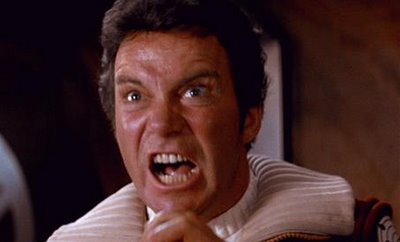
KHAAAAAAAAN!


Star Trek marathons rule. I'm so psyched. Wrath of Khan is legit. Get into it.

Monday, February 2, 2009

The Tree in the Middle of the Field

I wrote this in less than an hour without thinking. I sometimes exist without thinking. Ok.


Jon and Sarah had first met at the tree in the big field and had proceeded to meet there for seven years. The field was enclosed by trees on all sides, and on two opposing sides of the field beyond the trees were two opposing roads. Jon and Sarah lived in houses on those roads. Jon had retreated to the tree in times of distress and boredom, and after establishing it as "his spot" had spotted Sarah there one day. He approached the tree with a sense of entitlement.
"What do you think you're doing here?"
"Sitting."
"Well this is where I sit, and I've never seen you here before, so get out of here and we'll pretend it never happened."
Sarah stood up. She had more than a few inches on him, along with a few years.
"I'll rock-paper-scissors you for it."
Jon scowled. She had found his weakness. At eight years old, Jon was a master bargainer, debater and compromiser. He enjoyed taking any disagreement into argument and finding his way of convincing the other person of anything. That was until a year ago, when his mother, having seen the ambitious politician in him (she hated politicians with every ounce of her hybrid-driving, weed-smoking, Nader-voting heart), posed the rock-paper-scissors match of all rock-paper-scissors matches. The terms: win, and he gets to debate anything to the end of eternity; lose, and every fight or disagreement that bears no clear winner must be decided on rock-paper-scissors. He lost. The sight of scissors made him sick.
"Fine," said Jon, "let's do it." A year of practice had sharpened Jon's skills as psychologist of the hand. He did not expect to tie in every one of ten matches. He left in defeat, but knew he had found his equal. The tree was no longer his, it was theirs. 
In seven years, Jon and Sarah perfected the art of rock-paper-scissors. RPS, as they came to call it, enabled them to pursue psychology, but only as it pertained to RPS. Once a week they met at the tree, conducting research by themselves, eventually bringing other people as test subjects. The experiments went well: they high-fived each other often.
The experiments led to publications in psychoanalysis journals that won them international acclaim from a strange group of socially-repressed people, who labeled them as prodigies. They won over 200 awards alone for their third report, "Why Does Paper Beat Rock?", half named after Freud. It was a dull trophy case.
The bright young minds started work on their book, always writing at the tree, which was now surrounded by desks, file cabinets and a secretary named Gena. Jon was in love with Gena, but no time for that. He was also learning to suppress his rage over Sarah, never letting go of the first RPS match that started it all. With seven years of work, he had finally grown to appreciate Sarah for who she was, and decided to put their research above a silly game and a grudge.

The book had been released and the publicity tour had followed. Sarah decided to do Australia alone, and Jon hadn't bothered to argue. He was to meet her at 4 p.m. on the day she returned. Like a bride to her wedding he walked the long, familiar walk to the tree as he had thousands of times before. It was a good day, he could feel it.
Standing under the tree was not Sarah, but her brother Clyde. Jon did not like Clyde, did not like anyone named Clyde and did not think polo shirts were acceptable seven days a week. But Clyde looked distraught and Jon had to know what the matter was.
"Why the long face, Clyde?"
Clyde was silent for several moments.
"The plane...her returning plane...it crashed. She's dead."
Jon was taken aback and expressionless.
"Oh...I'm so sorry Clyde. I - I have to go. Goodbye now."
Turning around and grinning, Jon thought, "Finally! I always hated going to that godawful tree."

Wednesday, January 14, 2009

Favorite Films of 2008 Pt. 2

I apologize for taking long with this second part. I appreciated the kind words. (<--- I even wrote that like a week ago, I'm awful). I am both lazy and an opponent of all things dutiful, where making a first part and not making a second part required my making a second part, thus making it a duty, thus making me not want to do it. I also felt compelled to wait to see The Wrestler, and....you'll see. Also I flat out just skipped reviewing Frost/Nixon. This is me finishing. Ok, bye. Jeeze.


10. The Dark Knight - Christopher Nolan
Did you expect it to be higher? Tsk tsk. This is the best comic book film ever; anyone who has said that was correct. On a serious side, there were a lot of issues this movie covered: perspectives on sanity, commitment, true nature of good and bad. Blah blah. On a less serious side, movie was just balls-to-the-walls ridic. Anything that gets a billion people to see a decent movie that's 2 and a half hours long is alright with me. Oh, and Heath Ledger was in it. 

9. Silent Light - Carlos Reygadas
I would like to host a gathering of great opening film scenes, allowing them to mingle with each other and discuss the times. Apocalypse Now would be the raging pyromaniac; Once Upon a Time in the West would walk around carefully and with apprehension; Pulp Fiction and Reservoir Dogs plotting something in a booth. In the corner would be Silent Light, a newcomer and far from being the dashing Raiders of the Lost Ark, and upon standing, would reduce the room to silence and awe.

8. Milk - Gus van Sant
An exceptional biopic. That sentence won't come out of my mouth until I see Che, and then it won't come out for another few years. The biopic is such a ruined genre that doesn't have to be: who invented the cookie cutter for it? Milk joyfully steps out of bounds of tradition and makes a character, not a caricature. I watched The Life and Times of Harvey Milk shortly after this and having seen the man himself, Sean Penn deserves every ounce of praise, and Gus van Sant deserves enough to say he was true to the man.


7. Wall-E - Andrew Stanton
Wasn't it just cute? I thought it was. But no, really, it was more than that. Lots of metaphor for our current status of consumerism that I'm pretty sure went over most people's heads that actually live like those people confined to chairs. Sad. I don't know what else to say, Pixar is still batting .100 (ah, a baseball allusion, I hate baseball) and has yet to make a film that doesn't waste my time. Oh yeah, I never did see Cars. That looked bad. Oh well.

6. Frost/Nixon - Ron Howard
-oops, Laziness. sorry?

5. Happy-Go-Lucky - Mike Leigh
Sally Hawkins is the best, and I can't believe the Academy shut her out. Eddie Marsan ^, also great. Lots of good stuff. I want to finish. I'm doing this out of order. Sorry.

4. Slumdog Millionaire - Danny Boyle
It took making a fairly mainstream movie for Danny Boyle to finally get the attention he's been deserving for the longest time. As mainstream and typical as the premise is, Boyle's execution is anything but. The spirit that dwells in the main character, though portrayed by three actors, is both universal and true. Blah blah blah Best Picture blah blah blah.

3. Synecdoche, New York - Charlie Kaufman
"All-encompassing" is what comes to mind. The 8 1/2 of our generation. The complete and total explanation for all things creative and all things life. But is that explanation really complete or total? Of course not. Breaking down creativity and life to something simple is wrong and the work of someone who knows little about either. Somewhere in space and time, Ben Lyons is saying the film is "difficult to understand" while he stumbles around looking for symbolism and thinking it may just be a dream. And somewhere in space and time, I am sitting and laughing at him while I enjoy the summer day.

The Wrestler - Darren Aronofsky
I had to throw this in here. Had to. Was compelled to. Would have been wrong if I did not. Didn't have a choice. Incredible and heartbreaking. Randy "The Ram" is up there in my favorite characters. It was the little things in it that got to me: the Nintendo scene with the little kid and the wrestling game he was in; every time someone called him Robin, his real name, and the sting it seemed to leave; the fact that the stripper and him both hide behind fake names and lose their identity in it. Ugh. Blew me out of the water. See it, please. 

2. Doubt - John Patrick Shanley
An acting feast. MMMMMM. I felt so full yet so empty after seeing Doubt. Empty in a great way, empty like "yeah man, I have doubts too, fuck, I'm not sure about anything anymore, jeeze". Like that. Gorgeous as well (thanks Roger Deakins!). "Look at that...you broke my lightbuld". If I could, I would give my own awards to everyone in this. Hoffman, Streep, Adams, Davis. All of them. They win. World Series champs.

1. Man on Wire - James Marsh
A story about a dude who tightrope walks between the Twin Towers. A glorified fictional adaptation by McG? No. A brilliant documentary that serves as a crime thriller, only my favorite genre in the history of movies? Game, set and match. This is beyond brilliantly executed. Philippe Petit is the greatest man. He just loves to walk on ropes. That's it. The interviews with him are so full of passion and memory. The scenes of the event itself are reenacted so well, so well. The tension that builds is so huge, even knowing he eventually succeeds. This was my favorite movie of the year because I didn't feel like I was watching anything: I truly felt apart of the caper itself. 


Phew, I'm done!


Sunday, January 11, 2009

Favorite Films of 2008 Pt. 1

This year in movies turned out to be fairly decent. While Beverly Hills Chihuahua and Epic Movie and whatever other inferior wastes managed to attain mass audiences as always, lots of great movies came and surprised me. Living in Philadelphia enhanced my availability of seeing limited distributed films (thank you Ritz Theaters). I made a point of seeing almost all movies I wanted to see in theaters where the true experience is found. While typical "Oscar-bait" films did not succeed at the level of past years, there were plenty that could transcend both critical and commercial appreciation. I saw a very large amount of films that came out this year (as far as ones that I wanted to see, I don't waste time on seeing every piece of shit that comes out, although I did see a fair amount of shit), and I feel like I can look back on this year with confidence saying it was a good year.

Also, this is the list of things that have been impossible to see, or I just was unable to get around to it, and having seen them, would have potential to get on this list:
The Wrestler                                I've Loved You So Long
Revolutionary Road                 Wendy & Lucy
The Reader                                   Frozen River
Ballast                                            The Class
Rachel Getting Married

20. The Curious Case of Benjamin Button - David Fincher
Listen, this is not a bad movie. Great in scope, great in effects, but severely lacking in character and purpose, which in other movies may be alright, but not in one that tries this hard. The thing that immediately took me out of it was his aging condition, which may be unique, but hardly has great effects on his life overall other than certain situations. And considering that's the gimmick, and it serves little purpose, what's the point? Certainly a movie-going exeprience. Fincher completely saves the movie and is the only standout talent. 


19. In Bruges - Martin McDonagh
"Two hitmen go on a trip, one getting assigned to kill the other." That sentence sounds like it came out of the mouth of every other Tarantino jerkoff. Fortunately, the movie is smart in its basic concept and expands into something surprisingly meaningful. Extremely funny. Ralph Fiennes, Brendan Gleeson and (yuck) Colin Farrell all deliver beautifully. 


18. Gomorra - Matteo Garrone
How refreshing to see an unstylized crime movie with several plot threads that DON'T come together and don't have any kind of large significance. The only significance here is that crime is real, and it's real bad. Based on a true Italian crime gang that is still active, the movie has resulted in Garrone being escorted with armed guards everywhere he goes. Brutal and simple. 


17. Vicky Cristina Barcelona - Woody Allen
Ah, it's nice to see you Woody. Back from his stay in the land of convoluted thrillers (I did like Match Point) and general weakness, Woody Allen finally returns to form in this superb analysis of relationship and character. I thought this movie had a unique tone for him, not that he hasn't blended serious and funny together before...I tried to finish this sentence but couldn't. Anyway, Penelope Cruz deserves every award ever for this; Rebecca Hall was a great surprise; Patricia Clarkson is criminally underrated, and Scarlett Johansson continues to reduce another wonderfully written character into a monotone and altogether boring person. 


16. The Counterfeiters - Stefan Ruzowitzky
An interesting and powerful take on the Holocaust: Jews in concentration camps counterfeiting money to supply Germany and bolster them throughout the war. Essentially living like kings, as much as that means in a concentration camp, the counterfeiters weigh their lives against their actions as they aid the enemy and save themselves. Another great movie that along with The Lives of Others, Good Bye Lenin!, and Sophie Scholl - The Final Days, shows a promising resurgence of German cinema.


15. Transsiberian - Brad Anderson
Nerve-wracking. Wow. Beware any with a heart condition, for it will never stop beating nervously throughout Brad Anderson's follow-up to The Machinist. You watch the situation unfold and realize the characters on the screen are as powerless as you are in front of it. Woody Harrelson continues to take smaller roles and completely own them and show everyone else up. Emily Mortimer is also one of my current favorites, and Ben Kingsley with a Russian accent is funny. Goofy towards the end, but completely relentless and fast-paced.


14. 4 Months, 3 Weeks and 2 Days - Cristian Mungiu
A 2008 United States release warrants this being on the list, but really, even if it was technically 2007, it's good enough to care about the next year. It takes the now Juno-ed topic of unwanted pregnancy and drains it of all color and comedy, leaving a serious mess sequestered to a small hotel room. A girl seeks an abortion in a 1987 Romania that prohibits it, and suffers the consequences as she and her friend delve into the dark world of illegality. Its vision is cold and its characters quiet. The dinner scene is fabulous. That's all I can say. 


13. Iron Man - Jon Favreau 
The abundance of comic book movies these days is an unnerving reminder of how Hollywood works in trends. Superman served the 80's, Batman served the early 90's and Spiderman pretty much set the bar for almost every other movie to copy it in the 00's. Iron Man creates characters that feel genuine and real, for example, the scene where Pepper Potts is putting in Stark's arc reactor because he can't. C'mon now. The scenes those two are in create nice dynamic interaction that exudes honesty. The robot and Potts' encasing of Tony's old reactor that says "Proof that Tony Stark has a heart" are annoyingly cute. Mmmmm.


12. Encounters at the End of the World - Werner Herzog
Werner Herzog went to Antarctica with no intention of making "another stupid movie about penguins." This is the real Antarctica and the real people who live and study there. There are so many stunning images and encounters in this movie it's unbelievable, from the almost-techno sounding wales of the seals below the ice, to the scuba diving biologist on his last and emotional dive before leaving Antarctica, to the penguin who breaks away from his pack and runs into the middle of the land facing almost certain doom. This penguin scene is like none you've seen, but it's more breath-taking then any. A true documentary that relies on nothing more than conversation and what Herzog saw. Fantastic.


11. The Band's Visit - Eran Kolirin
Again, kinda 2007, but this time I do not care. I loved this movie. A police orchestra stumble off a bus about to play a concert when they find they've been taken to the wrong place. The band includes a rebel ladies' man, a solemn conductor and a loyal assistant. They find a restaurant to stay in with a similar group of interesting and offbeat characters. The awkwardness that ensues is funny and the conversations between the restaurant owner and the band conductor are poignant. Deadpan all the way. 


Part 2 tomorrow.